Posts

Customer Development for "Product You"

As a manager I've always found it hard to get honest feedback from employees and my management. In larger companies the feedback culture in management often boils down to: positive feedback leads to good reviews - which leads to expectations of paying higher bonus. Employees will give their managers good reviews even in anonymous 360 reviews. The solution LinkedIn's endorsement feature can a be used to get good feedback from people. It will tell you directly what you're bad, but it will tell you which are good at. Here is how it works    If you want to know if people generally think you are good at something Look at how many people endorse you for that skill.  If you have lots of endorsements for other skills, but none for the the skill you are watching. Guess what? People are telling you you don't have it. If you have a skill that you don't use often but you're wondering if you're any good at it Make sure its on your profile. If you get a nu...

What Is A Product Showcase?

I couldn't find a simple description of a product showcase today so I wrote a quick one myself The showcase is an important part of product development. In it the product development team shows newly developed features to the company's stakeholders before releasing them to customers. It promotes early feedback (before the cost of change is too high), facilitates communication between roles in organizations and ensures the correct product is being built.

An update to principled leadership

Image
Photo credit: raphaelchekroun One my most popular posts of all time is one I put up in 2009 about Principled Leadership . I still get traffic from this post and once got a very aggressive job solicitation based on the principals outlined in the post. Recently I came across a quote that nearly sums up the whole list in one sentence: Smart leaders understand it’s not just enough to pursue, but pursuit must be intentional, focused, consistent, aggressive, and unyielding. *I'm afraid I don't know exactly where this came from so, if you are the owner, please let me know so I can link back to you.

Shallow Copy in Ruby

I often wonder why some organizations only consider candidates who have computer science or computer engineering degrees. In the real world I have seen many great developers who have come from diverse backgrounds. However, I had an event recently that made me really happy I have a degree in computer engineering. It made me understand why the favoritism exists for computer science credentialed developers. I had an issue with an email template in Ruby on Rails that without a good mental model of compilers and, specifically, compiler optimization would likely have taken a long time to identify and fix. Here is what happened: in a database somewhere... UPDATE app_configs SET affiliate_template = 'Welcome to UrbanBound #[FirstName], ' def send_email_to_todays_movers   Mover.each do |m|      @boiler_plate_email = AppConfig.find_by_config_name('affiliate_template').value     [business logic goes here]        prep_mover ...

From the maker's perspective...

I came across this article via LinkedIn. It reminds me of the Maker Schedule, Manager Schedule discussion except its from a maker perspective. Given that I have been doing a significant amount of development in Ruby on Rails for UrbanBound  for the past 3 months, I'm following a maker's schedule again. Being my own boss makes things simpler , however I think its important for makers to understand how to be productive and articulate to their management how they can be best managed. If this seems a bit counter intuitive to you. I can tell you that good managers do know how to manage. However, given all of the pressures around managing a business, its easy to fall into the trap of thinking about management objectives over the needs of the people who getting the work done. A healthy reminder: 7 Things Highly Productive People Do

Call It Like It Is - Save Time and Money by Filtering Out Non-Users in Your Application's Design

Image
At UrbanBound we are  necessarily obsessed with who our users are - and who they aren't. An application designed for baby boomers utilizes very different design principals than one designed for a younger audience. If we try to design for everybody (the lowest common denominator) we just aren't going to be compelling enough to anybody. We keep a visual reminder posted of who we are, and who we deliberately aren't, build for. This way we don't waste time and limited resources on people who aren't likely to work with us.

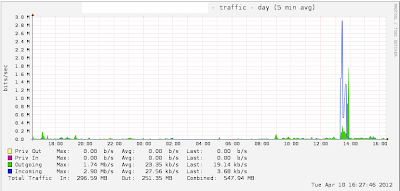
Why I hate the Internet sometimes

Image
 Watch my site get slow. Watch me download the logs to make sure nothing happened. Thanks for wasting my time script kiddies.